BACK



A list of 4 concept abstracts about abstract concepts
Project ideas, images, references, and more
Andy Cabindol
January 31st, 2026

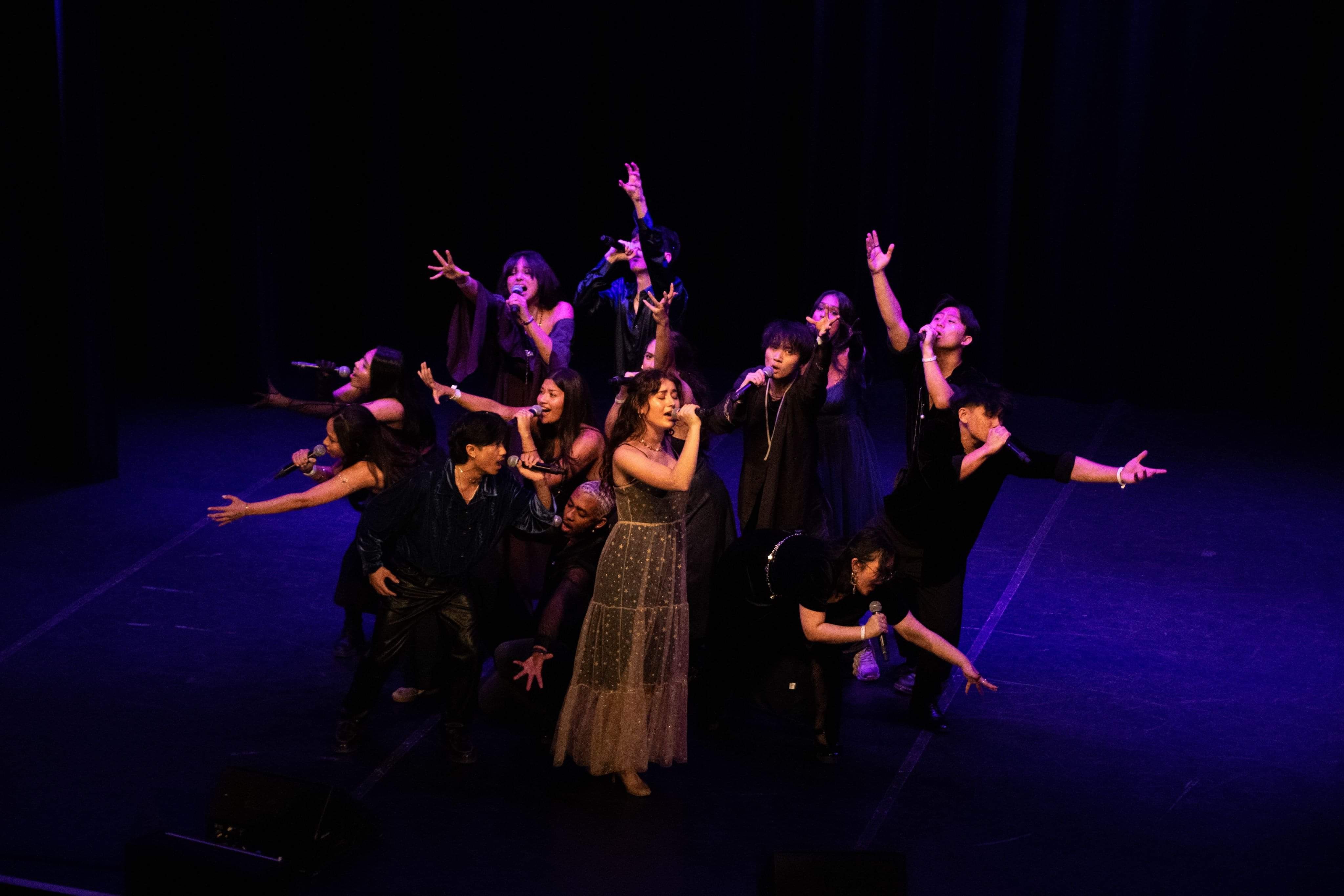
1. Acapella Waves - An Interactive Acapella Projection Concert
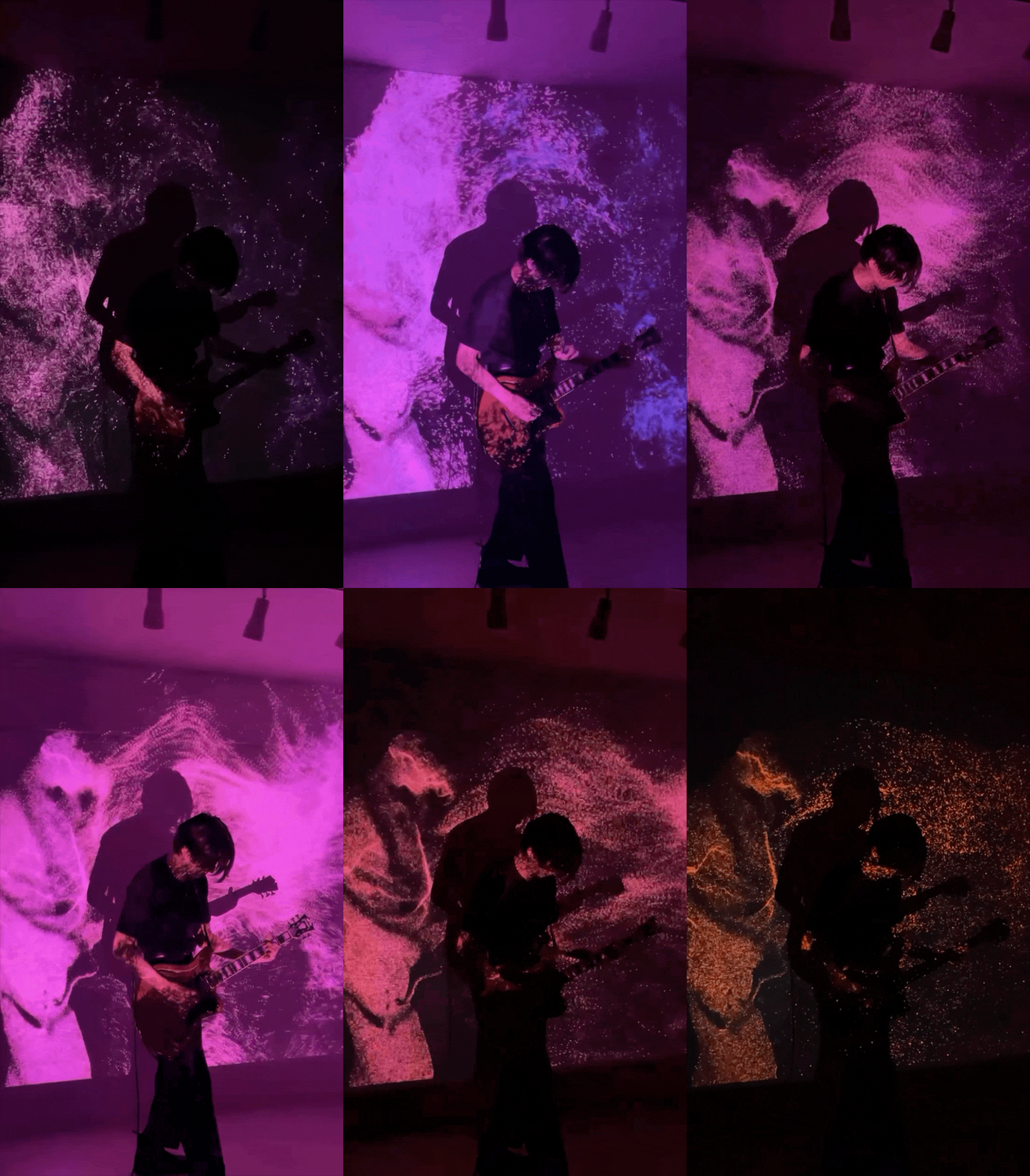
Acapella Waves is an interactive audio-visual experience that blurs the barrier between performer and audience through the medium of acapella. By using vocals as an input for projection animations, it allows the audience to actively participate in the concert through hand gestures rather than plain consumption. This project seeks to answer the question of how to visualize the ephemeral nature of vocal harmony.
To achieve this, live performances and similar art installations utilizing haze machines to create volumetric canvasses for light were studied. However instead of complicated stage lighting, a single projector illuminating one solid line is used over the audience and performers' heads. As the light passes through the haze, a ceiling of light is formed, allowing performers and audience members to interact with it, creating beautiful harmonic sound.
The success of the experience was evaluated through a combination of observation of audience engagement and reactions, as well as a survey at the end of the experience. Audience members found the interaction between acapella performance and their participation with light projections mesmerizing, encouraging them to experiment with pitch and volume. While ambient noise occasionally triggered unintentional harmonies, the connection between sound and light was extremely effective.
Despite these minor sensitivity issues, Acapella Waves was deemed successful. If scaled for larger venues, this system could redefine live acapella performances by making the audience a part of the experience, and an instrument in the mix of sounds.
References (click on the pictures to view source material)
 |  |  |  |
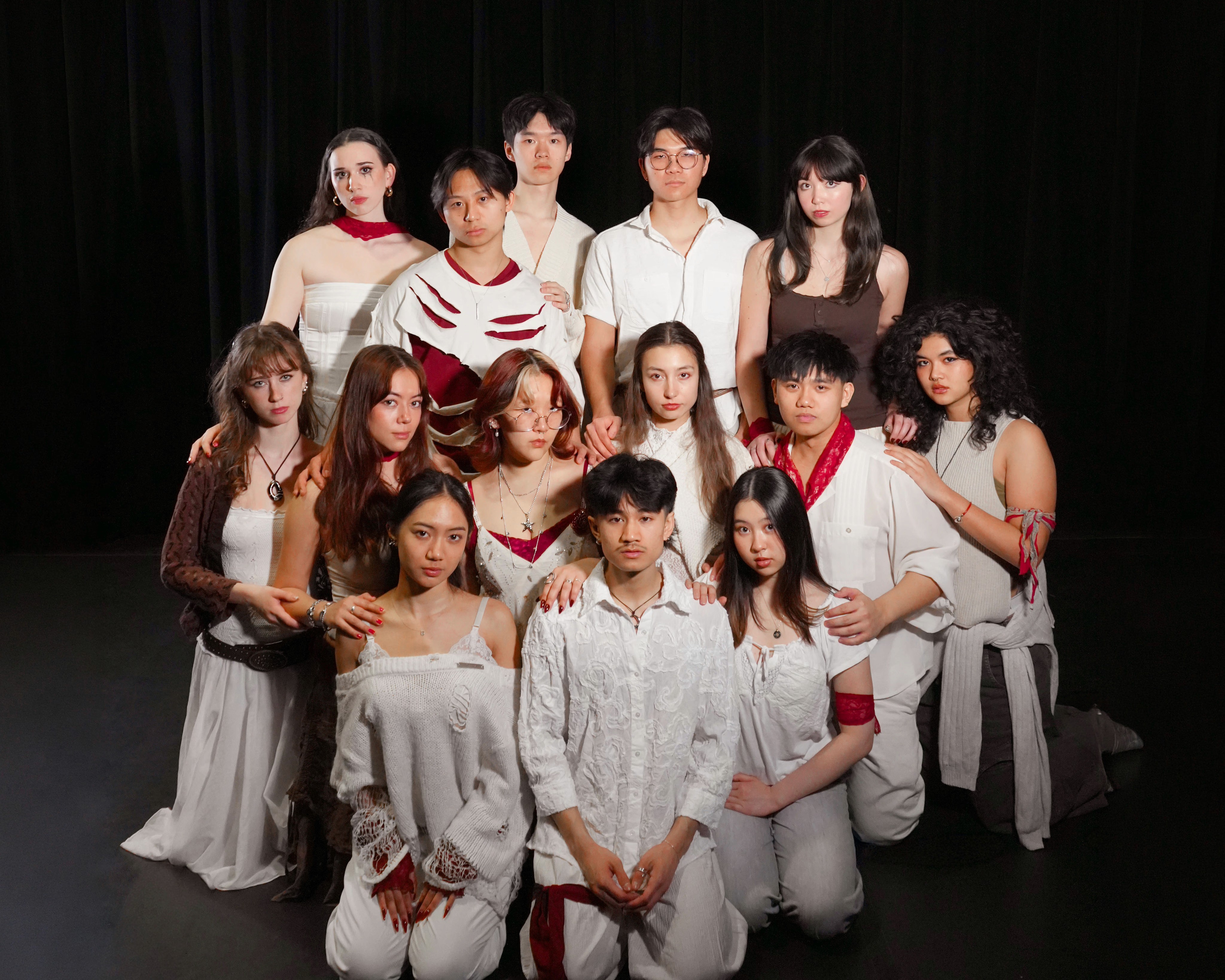
2. Draw The Line - Andy Cabindol's Life Motion Graphics Story
Draw The Line is a motion graphic narrative that explores autobiography through shapes, colors, and sound. By removing traditional video-storytelling elements like voice-overs and on-screen text, it challenges the viewer to interpret a life story solely through motion graphics and sound design. This project attempts to answer the question of how complex personal narratives can be conveyed through without words.
To achieve this, the popular YouTube trend "Draw My Life" was analyzed and deconstructed, remove literal narration to focus on pure audio and visuals. Visual techniques drawn from the word-less animated movie "Flow" were also used to replicate emotional drive without the use of words. The narrative was storyboarded in Figma and animated entirely in Adobe After Effects, relying on the twelve principles of animation, most notably Squash and Stretch, Slow in Slow Out, and Anticipation. As for audio, Epidemic Sound's vast sound library was searched through to create the motion graphic's soundscape.
Draw The Line's success was evaluated by screening the piece for viewers with no prior knowledge of the Andy's life to test narrative comprehension. Many viewers found the motion graphic story fascinating, noting that the commentary-less approach allowed for more interpretation and intrapersonal connection. Some timeline events were open to interpretation, leading to varied understandings and responses about its true meaning.
Despite this ambiguity, Draw The Line was deemed successful as a narrative. It demonstrates that motion and sound can transcend language barriers, offering a universal method for digital storytelling.
References (click on the pictures to view source material)


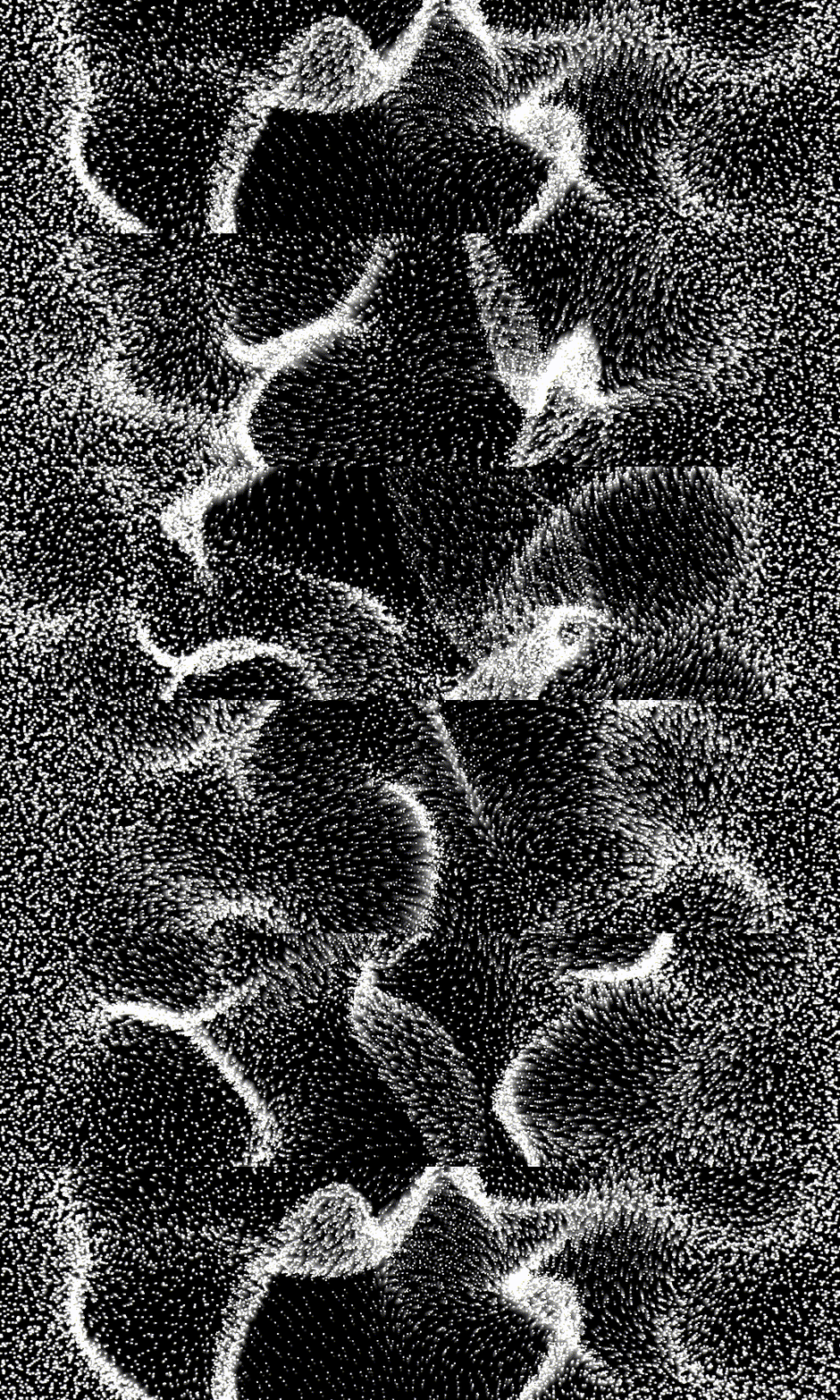
3. Bubbl - Voice-Powered Writing Tool
Bubbl is a voice-powered writing tool inspired by the capabilities of Gemini Live, ElevenLabs, and ChatGPT's Voice Mode. By eliminating the friction of the keyboard and encouraging free-flowing thought, Bubbl allows users to write and draft articles and papers using natural language. This project seeks to answer the question of "How might the writing process be abstracted and improved by removing visual distractions and allowing for multitasking?"
To achieve this, the visual language was inspired by Wabi's brand and UI to create a minimal and clean aesthetic that supports the audio-based experience. The tool has 2 writing modes: word-for-word dictation and "brain dump" summarization, where scattered thoughts are synthesized into coherent text, similar to Granola. Audio playback of the user's writing, replacing specific phrases, and requesting a change in the tonal "vibe" simply by asking were also features added.
For testing, the success of Bubbl was evaluated by the speed and comfort of drafting complex documents. The first task was for the user to speak a given paragraph, and then we evaluate the written accuracy. The second task was for the user to change a given paragraph to another paragraph using voice commands. Users reported that the "brain dump" feature significantly reduced moments of writer's block. However, editing granular punctuation solely through voice commands proved slower than traditional methods for some users.
Despite the learning curve regarding editing controls, Bubbl was deemed successful. As a functional product that targets large pain points in the writing process, it has the potential to greatly improve accessibility in writing and assist people who think/speak faster than they can when typing.
 |  |  |

4. Musit - Music Composition + Versioning Tool
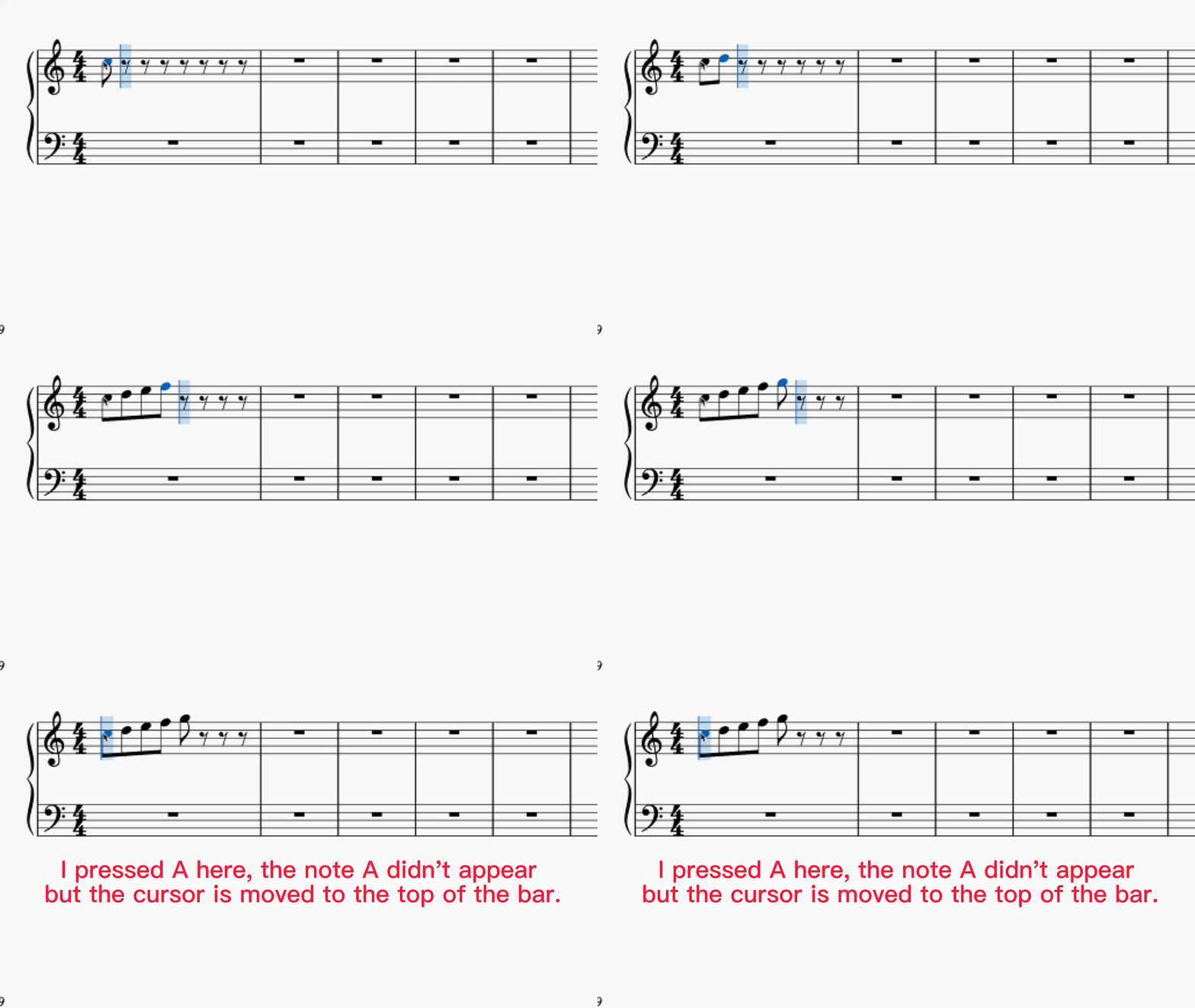
Musit is a music composition tool with version control, inspired by the capabilities of collaborative workflows from Git/GitHub and the music notation capabilities of MuseScore. By incorporating "commits" and "branches" to music scores, Musit targets the chaos of collaborative arranging, removing the process of transferring files and naming files with version numbers. Musit seeks to answer the question of how to score sheet music between many creative stakeholders.
To achieve this, the struggles of acapella arrangement collaboration were analyzed through real , specifically the struggle to track changes across multiple versions of a score. Musit's notation data structure was designed to treat musical bars like lines of code and a markdown language (rather than binary), allowing users to view differences between versions. This allows a music director to merge changes from an assistant music director or revert to a previous arrangement without losing data.
The project was evaluated through real use within an active acapella group during their arrangement process. The music director reported a significant reduction in file tracking time and miscommunication between contributors regarding updates. However, arrangers unfamiliar with git concepts found the staging and commit process confusing.
Despite a need for better onboarding for non-technical musicians, Musit was deemed successful. If developed into a full platform, it could become the industry standard for collaborative music composition in ensembles, orchestras, and singing groups with multiple creative contributors.
Reference (click on the picture to view source material)
**Initial drafts of concept abstracts were brainstormed by Google Gemini with the prompt below for input and structure purposes, but were heavily edited, revised, and refined to align with what I had in mind for each project.
Keyblocks is a modular key system designed to provide personalized keyboard arrangements. By re-evaluating and curating the keyboard space, it allows users to create a typing experience that caters to their individual needs. This project seeks to answer the question of how to personalize the typing experience.
To achieve this goal, the history of the keyboard was studied, analyzing the QWERTY layout and subsequent changes from its initial patents. The mistakes of a previous project were also taken into account, and the structure of the full-size keyboard was broken down into modules that could be connected together. The housings for all the modules were 3D modeled and printed in ASA material with the assistance of LaGuardia Studio.
Upon assembly, the success of the project was evaluated by assessing user interaction and the ability to create different form factors. Many testers found the concept intriguing and enjoyed connecting the modules to reconsider their keyboard use. However, some modules did not connect in the way users intended, limiting creativity.
Despite this setback, the project was deemed successful, and if developed into a functional product, could see success in the global market.